US Navy Seeks Offensive Cyber Tools at the Tactical Edge
Department of the Navy principal cyber advisor Anne-Marie Schuman asked industry at the Billington Cybersecurity Summit for expeditionary and tactical-edge cyber capabilities, including offensive or offense-supporting tools. The request follows 2022 U.S. doctrine on expeditionary cyberspace operations and the Navy 2022 cyberspace vision that includes a strike pillar.
Call at the Billington summit
Department of the Navy principal cyber advisor Anne-Marie Schuman asked industry in early September at the Billington Cybersecurity Summit in Washington for more expeditionary and tactical-edge cyber capabilities, including offensive or offense-supporting tools. She said the goal is to meet the U.S. secretary of defense intent for strong cyberspace effects options.
Schuman said: "I propose to industry... if you are interested in discussing expeditionary cyber, tactical-edge cyber, especially offensive or offense-supporting capabilities, come talk to me. I very much want to hear more industry ideas on expeditionary cyber capabilities." She did not name specific products.
She added that as the information warfare system is refined, the Department of the Navy is integrating multi-domain capabilities to support tactical and operational commanders in contested environments. Those efforts are meant to give timely support to maritime operations and to raise agility and independent action for forward-deployed Navy and Marine Corps personnel. She said the department is working closely with U.S. Cyber Command.
Effects from ships without waiting on mission teams
Navy officials want commanders to generate cyberspace effects from ships without first requesting permission or waiting for high-demand Cyber Mission Force teams. That option is intended to give commanders more flexibility against more complex adversaries.
The Department of the Navy 2022 Cyberspace Superiority Vision set a three-part approach of assure, survive, and strike. The strike element already pointed to offensive requirements.
In February, Schuman said she could not discuss specific operations but that recent examples, also described in public by other defense officials, showed fleet integration of kinetic and non-kinetic effects in a joint setting. She said that integration would become routine rather than exceptional, and that new architectures may appear as expeditionary cyber operations expand.
Doctrine change since 2022
The public request records a more offensive U.S. military cyberspace posture. It also records that some capabilities will be used at the tactical edge by personnel from different services and combatant commands at different times.
That model differs from the long-standing U.S. Cyber Command practice of launching nearly all cyber operations from more fixed facilities.
The shift was prepared over several years. A 2022 revision of U.S. Department of Defense cyberspace doctrine formally included and defined expeditionary cyberspace operations.
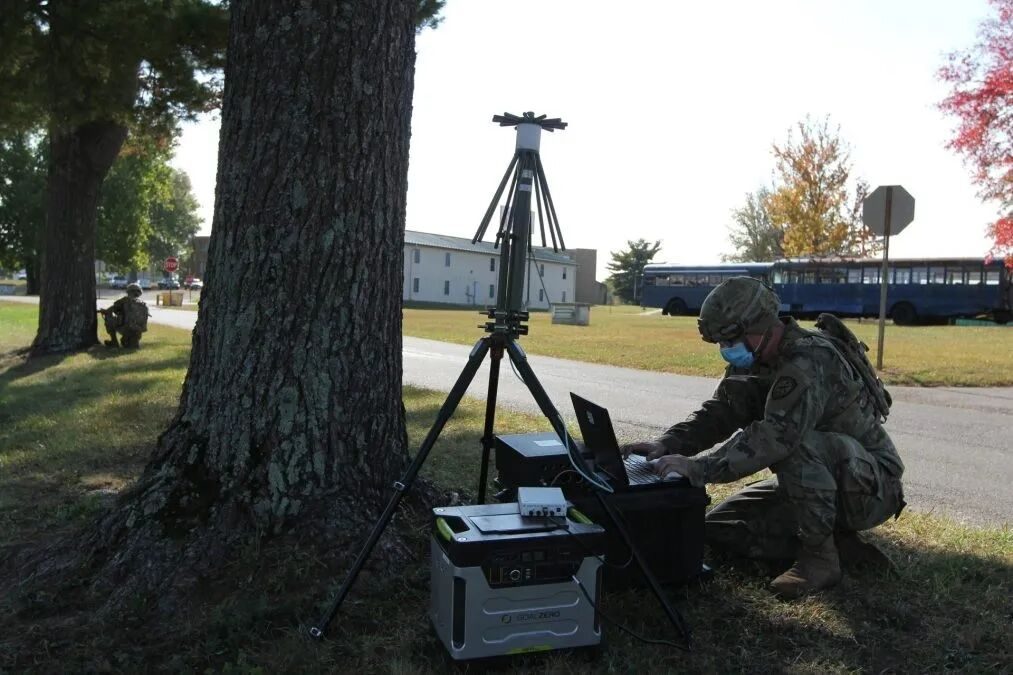
U.S. services have each begun building their own expeditionary or tactical versions. The Army fielded the 11th Cyber Battalion and has approval for a second cyber battalion. The Air Force has a Cyber-Enabled Air Superiority unit, a National Guard formation assigned offensive cyber tasks to protect Air Force core functions. The Navy has non-kinetic effects cells.
Access at the edge and handoff to Cyber Command
Operations at the tactical edge require different equipment because battlefield targets are often not connected to the public internet. Effects are often delivered through the electromagnetic spectrum. Battlefield commanders typically have more discretion over those authorities than over traditional network operations.
The Department of Defense has sought tactical effects or teams that can help gain access to hard-to-reach networks, such as hardened networks that control air defenses, and then transfer that access to U.S. Cyber Command operators.
Acquisition gap
Schuman last week said Navy Department personnel must recognize they are not well set up to work with industry, accept offered capabilities quickly, and deliver them to forces. She added that, amid wider procurement reform, the Navy is in a notable period and that "the ship has turned."
The account was compiled from public remarks.